Get T3 Delivered Fast: Secure Your Order for the Best Rates
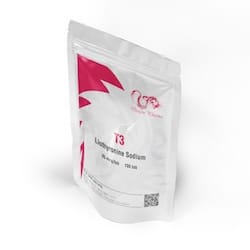
Get T3 Delivered Fast: Secure Your Order for the Best Rates
Mastering Your T3 Cycles and Intake Levels
T3, or triiodothyronine, demands a careful hand. If you get greedy, you risk entering hyperthyroidism, a dangerous state where your metabolic engine runs uncontrollably fast. I usually recommend starting with a tiny 25mcg dose, then adjusting your intake based on how your specific biology reacts to the supplement.
To keep your internal systems running smoothly, most experienced users follow a specific cycling schedule. This prevents your own thyroid gland from essentially going on a permanent vacation. You need to give your natural endocrine pathways time to breathe so they don’t shut down entirely.
Think of your metabolic rate like a controlled campfire. If you throw a massive log onto the embers all at once, you’ll create a wild flare-up that consumes everything. T3 acts as that accelerant. Too much, too soon, and you’ll face shaky hands, racing heartbeats, and feverish sweating.
I always tell my friends to take the slow road. You aren’t trying to win a frantic sprint; you are aiming for a consistent, steady burn. Many find their rhythm by starting at 25mcg per day, only nudging the dose upward if their energy or fat loss hits a wall.
What this means for you is that patience is your greatest asset. Trying to blast your system with high doses right out of the gate is a recipe for a disaster. Your goal is that ”sweet spot” where you feel vibrant and warm without feeling like you’ve had ten espressos.
The Logic Behind Cycling
Your body is a creature of habit that loves homeostasis. When you introduce synthetic, lab-made T3 into your system, your natural thyroid might decide it’s no longer needed and stop working. This biological slowdown is commonly referred to as HPT axis suppression.
To dodge this trap, many athletes implement cycles. They might take the hormone for six to eight weeks before entering a ”washout” phase. This break allows your natural hormones to recalibrate. It’s much like pausing for a breather during a steep hike so you don’t collapse at the summit.
If you ignore these cycles, you might find yourself feeling incredibly sluggish or even gaining weight despite eating less. This occurs because your internal production has effectively stalled. You have to play by the rules of your own biology to see real changes without the inevitable crash.
Some people prefer a simple ”on-off” rhythm, while others find success with a ”tapering” method. Tapering involves dropping your dosage slowly over a two-week period before you stop completely. This gentle exit prevents a sudden metabolic slump that often triggers rapid fat regain.
Tracking Your Progress and Dosage
When you’re shopping around, you’ll notice prices fluctuate. A single 30-count bottle of T3 often ranges between $30 and $50, depending on how pure the product is. Always stick to reputable sources like poseidonrx.com so you aren’t wasting money on low-quality junk.
I highly recommend keeping a personal log of your metrics. Keep an eye on your daily calorie intake, body temperature, and resting heart rate. If your resting pulse climbs by more than 10 beats per minute, your dose is likely too high. Treat that jump as a major red flag.
You really shouldn’t guess when it comes to your hormones; use actual data instead. Getting bloodwork done to check your Free T3 and TSH (Thyroid Stimulating Hormone) levels is the only way to know what’s happening inside. Lab results provide the clearest map for your journey.
| Protocol Style | Timeframe | Main Objective |
| Standard Cycle | 6-8 Weeks | Metabolic Boost / Fat Loss |
| Tapering Cycle | 10-12 Weeks | Reducing Side Effects |
If you feel tempted to ramp up your dosage because the scale is stuck, take a breath and stop. Usually, the culprit isn’t the T3, but rather poor sleep or insufficient protein. The Mayo Clinic offers great insights into how thyroid issues impact your general health.
The bottom line is that T3 is a potent tool, not some magic pill. You must treat it with respect. If you follow a ”slow and steady” philosophy, you’ll see much better physical changes than the person trying to force the results through massive doses.
Understanding the Financial Investment
You’ll likely see T3 prices fluctuate between $1.00 and $3.00 per serving, a difference driven by the supplier’s reputation and the product’s refinement. If you are looking to stretch your dollar, grabbing a 100-count container usually provides the most logical bang for your buck.
However, the sticker price on the label is just the tip of the iceberg. The actual financial commitment involves the mandatory, recurring expense of clinical blood monitoring to track your hormone levels and keep yourself out of the danger zone.
Evaluating Different Seller Strategies
As you browse the marketplace, the disparity between ”budget-friendly” deals and top-tier, pharmaceutical-standard products will jump out at you immediately. Avoiding unverified, low-cost powders is vital because they are essentially a roll of the dice regarding dose consistency.
Since T3 is measured in tiny micrograms, a minor slip-up in a factory’s measurement process can instantly transform a regular dose into a lethal amount. I’ve watched plenty of people try to skimp on costs by sourcing from sketchy, unregulated sites, but that’s a losing game.
You aren’t simply purchasing a powder; you are buying the certainty that comes with verified purity. Vendors who provide third-party lab reports often command higher prices because they prioritize your safety over a quick sale.
Think of it like picking a part for your car’s engine. You could install a cheap, generic sensor, but that knock-off will eventually trigger a massive mechanical failure that costs you a fortune in repairs. Don’t treat your endocrine system like a scrap yard project.
A Breakdown of Typical Pricing Structures
I’ve laid out a quick reference guide below to help you map out your anticipated spending across different quantities and quality levels.
| Volume / Quality Level | Approximate Price | Ideal Use Case |
|---|---|---|
| 30-Count (Trial) | $45 | Checking individual tolerance |
| 100-Count (Standard) | $120 | Completing an 8-week run |
| Bulk (500+ Count) | $450 | Frequent, long-term users |
| Premium Lab-Tested | $180 | Prioritizing total safety |
Accounting for Secondary Expenses
The price you see on the shelf is only a fraction of your true overhead. You need to budget for the lifestyle shifts that accompany exogenous hormone use, such as the increased caloric intake needed to protect your muscle mass and the various supplements required to support your internal systems.
You also have to earmark funds for doctor visits and diagnostic testing. I tell everyone I know that if you aren’t prepared to pay for regular bloodwork, you shouldn’t be touching T3. You have to keep a close eye on TSH levels to ensure you don’t inadvertently wreck your metabolic health.
The Mayo Clinic provides excellent resources on how thyroid issues can impact your overall well-being over time. Staying informed and managing these biological risks is a fundamental part of the ”cost” of being a smart user. Investing in knowledge now prevents a massive medical bill later.
The bottom line is that your finances should match your commitment to safety. Don’t get distracted by the lowest price; look at the total cost of using the substance in a responsible, effective way. A ”cheap” decision often turns out to be the most expensive mistake you’ll ever make.
How Your T3 Travels: Managing Temperature and Delivery
Ensuring your T3 arrives in perfect condition requires something we call cold chain logistics. Essentially, this means the hormone stays within a very specific temperature window—usually between 36°F and 46°F—from the warehouse to your front door. Without this strict control, you risk a major headache.
If a delivery driver leaves your box in a sweltering truck or a freezing depot, the active hormone can lose its punch. You don’t want to be paying for something that has lost its effectiveness before you even open the box. It is a delicate dance of temperature management.
Think of it as a relay race where the temperature is the baton being passed between runners. If that baton is dropped—for example, if a package sits on a scorching porch—the T3 molecule can actually change its physical structure. This makes your daily dosage completely unpredictable.
The Hidden Cost of Heat Exposure
I have sat with many people who were frustrated because their metabolic results were nowhere near what they expected. Often, the issue isn’t the dosage itself. Instead, the culprit is a shipment that suffered under extreme heat during transit.
If your medication has been ”baked” inside a hot shipping container, you might just be swallowing expensive, inert filler. It is a heartbreaking waste of your hard-earned money. You deserve a product that actually works as intended.
To protect your investment, hunt for vendors who utilize specialized gel packs and insulated packaging. These tools function as a thermal buffer, absorbing temperature spikes to keep the inside of the box steady. If a supplier claims ”standard shipping” is perfectly fine, run the other way. They are cutting corners on your dime.
What this means for you is that you need to be on the lookout. Don’t let your package linger in the mailbox for hours. Grab it immediately upon delivery and inspect the cooling elements. If those gel packs are totally melted or the bottle feels warm, reach out to your vendor right away.
Navigating Transit Risks and Tracking
Logistics is about more than just staying cool; it involves speed and total visibility. You should look for ”real-time tracking” features. This digital monitoring allows you to see exactly where your package is at any given moment, so you can be home to receive it.
This level of visibility prevents your order from sitting in a stagnant, unmonitored warehouse for days on end. You want a system that moves quickly and provides constant updates on its location.
I usually recommend paying the extra $20 or $30 for expedited shipping. It might sting your wallet for a moment, but it is much better than losing a $100 shipment to a heatwave. Think of that extra cost as a cheap insurance policy for your metabolic wellness.
The bottom line is that you aren’t just paying for a pill; you are paying for a reliable delivery service. Premium vendors hire specialized couriers who actually understand how to handle sensitive biological materials. If a source chooses the cheapest, slowest method, they are gambling with your health.
When your package finally arrives, run through this quick checklist:
- Inspect the integrity of the seal to make sure nothing has been tampered with.
- Check that the insulation, such as bubble wrap or Styrofoam, is still in good shape.
- Make sure the gel packs are still cold and haven’t turned to ambient temperature.
- Ensure the batch number on your bottle is an exact match for your tracking info.
If you have even a tiny doubt about whether the shipment stayed stable, play it safe. You can always check how thyroid meds are typically managed via the Mayo Clinic website. Knowing how sensitive these hormones are will help you shop much smarter.
The true price of a shipment isn’t the shipping fee on the receipt; it is the price of a ruined dose. If the product degrades, your levels might become erratic or your effective dose might drop without you knowing. Treat the delivery logistics with as much respect as you treat the purity of the medicine itself.
Deciphering the T3 and T4 Dynamic
Think of T4, or thyroxine, as your body’s internal reservoir. It functions as a long-term supply that stays in your system for quite a while. On the other hand, T3, or triiodothyronine, is the real worker. This is the bioactive version that actually kicks your metabolic engine into gear.
Your body treats T4 as a raw ingredient. It doesn’t do much on its own; instead, it waits to be transformed into T3 to spark up your cellular activity. It is a beautiful, coordinated effort designed to keep your energy levels steady and ready for whatever the day throws at you.
You can picture this relationship using a simple analogy. Imagine a cozy fireplace. T4 is like a thick, heavy log that stays lit for hours, providing a slow and steady warmth. However, a log alone doesn’t give you that sudden burst of light or intense heat you need right away.
T3 is the bright, dancing flame that jumps from that wood. To get that immediate warmth, you need the fire to actually consume the log. Without that active flame, you’re just sitting next to a glowing piece of wood that isn’t doing much for the room’s temperature.
How the Conversion Works
Inside your cells, a specific biological process takes place using enzymes known as deiodinases. These specialized workers strip an iodine atom away from the T4 molecule. This simple chemical change is what transforms a dormant precursor into the powerhouse known as T3.
This switch is essentially the ”spark” that ignites your metabolic fire. When this mechanism is working smoothly, everything feels right. However, if this conversion pipeline gets backed up, you might run into trouble. You could have plenty of T4 floating around your blood, yet still feel completely wiped out.
I have encountered many people who feel absolutely exhausted despite having ”normal” T4 results on their clinical labs. They are often hitting a physiological bottleneck. It is a frustrating situation—it’s like having a massive warehouse full of raw components but no assembly line to build the actual product.
What this means for you is that T4 levels alone don’t tell the whole story of your metabolic vitality. You have to look at how these two players interact in your unique biology. When people use T3 supplements, they are essentially skipping the assembly line and delivering the finished ”flame” straight to their cells.
Key Differences at a Glance
Grasping these fundamental distinctions can change how you approach your wellness journey. While they belong to the same hormonal family, their daily responsibilities are worlds apart. One acts as the foundation of your system, while the other dictates how fast your metabolic rate actually runs.
I’ve put together a quick breakdown to help you see how these two essential thyroid hormones stack up against each other:
| Attribute | T4 (Thyroxine) | T3 (Triiodothyronine) |
| Metabolic Impact | Lower impact | High impact |
| Half-Life Duration | Long (roughly 6-7 days) | Short (roughly 1 day) |
| Primary Function | Storage/Precursor | Active metabolic driver |
The bottom line is that harmony is the name of the game. If you lean too heavily on one hormone while neglecting the other, you might find your energy levels behaving like a wild roller coaster. Rapid swings often suggest your body is struggling to manage the handoff from storage to active use.
Practical Advice for the Duo
Managing your thyroid isn’t just about chasing a single digit on a lab report. It is more like overseeing a delicate, complex dance of chemical signals. If you decide to introduce exogenous T3, you are stepping directly onto that dance floor, which requires incredible precision.
I often tell my peers that taking T3 is akin to pouring high-octane racing fuel into an engine. It can certainly make your system run faster and more efficiently, but if you overdo it, you might blow a gasket. Success depends on your body’s ability to handle that sudden surge without overshooting your needs.
If you start feeling jittery or notice your heart racing, you might be hitting a ”T3 spike.” This happens when the active hormone enters your bloodstream too rapidly. It is a classic sign that the ratio between your T4 and T3 is out of balance—the ”flame” is burning way too hot for the ”log” to manage.
Listen closely to the subtle cues your body provides. A seasoned expert knows that more is not always better. Often, the goal is simply to find that ”sweet spot” where your energy remains steady and your metabolism stays consistent. It is about finding a steady rhythm, not just increasing the speed.
Refining Your Daily T3 Schedule
To get the best results from your T3, try taking it alongside a meal. This simple tweak prevents that nagging nausea that often comes with thyroid hormones. It also keeps your energy from spiking out of control, ensuring you stay steady throughout the day.
Since T3 doesn’t hang around in your system for very long, you might find better luck by dividing your dose into two smaller parts. This strategy helps smooth out your metabolism. It prevents those uncomfortable, shaky jitters that happen when your hormone levels suddenly surge.
The Importance of Timing and How You Absorb It
When you are dealing with exogenous T3—the synthetic version of your body’s active thyroid hormone—the clock is your best friend. If you swallow your dose on an empty stomach, your gut might stage a protest through significant nausea or gastric distress.
I’ve watched many people struggle with stomach issues simply because they treated this potent metabolic driver like a casual vitamin. You have to respect the strength of what you are putting into your body. It’s a powerful tool, not a light supplement.
A big mistake I see is people gulping their whole dose first thing in the morning. While it seems easier, it can cause a metabolic mountain peak. You might feel anxious or shaky by the time noon rolls around, leaving you feeling quite unsettled.
Think of it like slamming a double espresso on an empty stomach. You get a massive rush, sure, but the subsequent crash is often brutal. You want a steady flow, not a series of violent peaks and valleys in your energy.
The bottom line is that predictability leads to stability. Your biology loves a regular rhythm. If you choose to split your pills, do it at the exact same times every day. This avoids that ”roller coaster” effect where you swing between hyperactive energy and total exhaustion.
What this means for you is that your breakfast schedule becomes part of the protocol. If you aren’t a morning eater, shift your doses to match. You want your peak hormone levels to line up with when you actually need that metabolic boost to tackle your day.
Watching for Side Effects and Finding the Right Dose
As you fine-tune your daily routine, keep a close watch on your temperature and heart rate. T3 acts like a heavy-footed accelerator for your metabolic engine. If you feel ”wired but tired,” your dose might be a bit too high or your timing might be off-kilter.
I often suggest jotting down a quick note of how you feel two hours after taking your dose. You aren’t being obsessive; you are just gathering data. Everyone reacts to triiodothyronine—the active hormone—differently. What feels like a gentle nudge to one person might feel like a lightning bolt to someone else.
If your heart starts racing or you feel palpitations, take a step back and talk to a professional. Never try to ”power through” a racing heart. The point is to restore your natural function, not to force your body into constant hyper-metabolism. Precision is vital here.
You can check the thyroid foundation for more information regarding standard hormone management practices and clinical guidelines. Getting a handle on the medical baseline helps you have much more productive talks with your doctor about your specific titration needs.
Budgeting for Your Health Resources
Staying on track requires more than just willpower; it takes a dedicated budget. Costs fluctuate depending on whether you use a standard retail provider or a specialized compounding pharmacy. You must also budget for regular blood work to keep everything safe.
The following table gives you a rough idea of the monthly expenses for various parts of a thyroid management plan in today’s market:
| Expense Category | Monthly Cost Estimate | Intended Use |
| T3 Medication | $40 – $120 | Core hormone replacement |
| Laboratory Tests (TSH/T3/T4) | $150 – $300 | Checking metabolic status |
| Supportive Supplements (Selenium/Zinc) | $25 – $50 | Aiding conversion enzymes |
The bottom line is that this routine is an investment in your long-term vitality. While the price of testing and high-quality medication can seem high, it is far cheaper than dealing with the fallout of an unmonitored, imbalanced endocrine system.
Trackbacks & Pingbacks
[…] Buy T3 […]
[…] Buy T3 […]
[…] T3 […]
[…] T3 For Sale […]
[…] T3 […]
[…] Order T3 […]
[…] T3 For Sale […]
[…] T3 […]
Kommentering är stängd.