Order Premium Clenbuterol Hydrochloride Fast Shipping
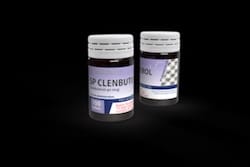
Order Premium Clenbuterol Hydrochloride Fast Shipping
How to Spot Real Clenbuterol Hydrochloride
Navigating the current market requires a sharp eye for detail. You have to distinguish between genuine Clenbuterol Hydrochloride (CAS 21898-19-1) meant for metabolic studies and those generic stimulants floating around. Real, research-grade material functions as a selective β2-adrenergic receptor agonist.
Generic stimulants simply don’t have the specific molecular blueprint needed for precise, lab-based biochemical investigations. Trying to use them for serious work is like trying to brew fine vintage wine using cheap grape juice. You aren’t merely hunting for a ”boost” or a ”buzz.”
You are searching for a specific, verifiable chemical identity. Many generic stimulants rely on caffeine or synephrine. These ingredients won’t touch the specific pathways you are attempting to study in a professional lab environment. Don’t let the marketing fool you.
If your research is your priority, hunt for the CAS registry number. This specific number, 21898-19-1, acts as the compound’s unique fingerprint. Without it, you are essentially sailing into a heavy storm without a compass, just hoping the vial matches the label.
What this means for you is that chemical precision must always outrank flashy marketing. A vendor might promise ”unmatched energy,” but if they refuse to provide the CAS number, they are likely peddling something far less predictable. Your metabolic research deserves better than guesswork.
The Mechanics of Receptor Agonism
Think of this molecule as a specialized key designed for a specific lock. At its core, the compound is a β2-adrenergic receptor agonist. In plain English, it targets specific cellular receptors to trigger biochemical processes.
These interactions can directly impact thermogenesis and the rate of metabolism. This specific capability is exactly why it has become a cornerstone in modern metabolic research. It isn’t just another stimulant; it’s a targeted mechanism.
When the agonist successfully binds to the receptor, it sets off a complex chain reaction. This isn’t a blunt tool that hits everything at once, unlike some older stimulants. It is a surgical instrument for the cellular world.
Researchers utilize this tool to monitor how cells react to increased sympathetic nervous system activity. The goal is to observe these responses without causing the heavy cardiac strain associated with other substances. It’s a delicate, nuanced interaction.
It’s a subtle dance between the molecule and the cell. Mastering this concept is the only way to separate actual reagents from the ”dietary supplements” cluttering retail sites. Most of those items are just caffeine wearing a fancy mask.
You will see plenty of talk about ”weight management” on sites like amazon.com. Please, do not confuse a supplement for a professional biochemical reagent. One is a simple food-grade additive; the other is a precision tool used to probe cellular metabolism.
Distinguishing True Research Purity
As you enter the world of high-impact compounds, you will notice various quality levels. You aren’t shopping for ”wellness” items here. You need high-purity biochemical grades that are manufactured under rigorous, strict protocols.
The goal is a substance that is virtually untouched by contaminants or useless fillers. For instance, a researcher might spend $2535 on a 5×5 mg quantity to guarantee the highest standard of purity. This isn’t a casual hobby; it is exact science.
When you deal with such high-impact substances, even a tiny impurity can wreck your entire data set. The bottom line is that ”research chemicals” and ”dietary supplements” are entirely different species. One is for controlled inquiry, while the other is for general consumption.
Mixing those two categories up is a massive mistake that leads to inconsistent results. I always suggest my peers treat their sourcing like a high-stakes professional audit. You should be demanding certificates of analysis every single time.
If a supplier can’t give you a technical breakdown of a specific batch, walk away. Don’t spend a single cent until they prove their quality. You need to know exactly what is in that vial before you start your work.
Verifying Your Source and Authenticity
How do you actually know what you are holding in your hand? You verify it through solid documentation and the reputation of your source. It is very easy to get lost in the ocean of online options.
You need to find established providers that specialize in chemical reagents. Avoid the general health shops. When comparing different vendors, checking poseidonrx.com can show you how various suppliers structure their inventory and pricing models.
You will notice a massive price spectrum. You might see low-grade options for $35.00 per package, while high-purity laboratory reagents cost significantly more. Use this comparison table to get your bearings in the market:
| Category | Primary Use | Expected Price Range |
| Dietary Supplement | Wellness / Energy | $35.00 – $50.00 |
| High-Purity Biochemical | Metabolic Research | $2,000.00+ |
| Standard Hydrochloride | Laboratory Testing | $39.95 – $40.00 |
If a deal looks too good to be true, it almost certainly is. Authentic Clenbuterol Hydrochloride 40 mcg might cost around $39.95, but that price applies to a very specific concentration. Always demand clarity on the exact milligrams per dose.
Don’t let the fine print slide. If you want to see how medical suppliers categorize these items, take a look at this medical product list. It offers a clear view of how the scientific community buys and packages these compounds professionally.
Evaluating Market Costs and Purchasing Value
The price tag you see on the shelf can swing wildly depending on how much substance is packed into each unit and the quality of the material. You will frequently see 20 mcg options popping up for those just beginning their journey.
However, moving up to a 40 mcg strength often yields much better results for your research budget. If you are looking to stretch your funds, I suggest focusing on the cost-per-pill. Buying in larger quantities, like the 5×5 mg sets, is usually the smartest way to save.
Think of it as a long game. A cheap box might look tempting today, but it won’t hold a candle to the savings found in bulk arrangements. Always keep an eye on that unit price to ensure your laboratory remains cost-effective.
Analyzing Economics Between Doses and Bulk Supplies
When you dive into the actual math, you’ll spot a massive gap between small, low-dose tablets and the heavy-duty bulk options. A beginner might find 20 mcg pills perfect for observing minor metabolic shifts during a short trial.
But there is a catch. Those smaller containers often hide a much higher price per milligram. You end up paying a ”convenience tax” for the smaller packaging, which can drain your budget much faster than you’d realize during your initial setup.
If you step up to the 40 mcg potency, the math starts working in your favor. You’re getting much more active material for every dollar spent. It is a lot like grabbing a family-sized gallon of milk instead of several tiny cartons; the value is undeniable.
For those conducting professional-grade studies, the 5×5 mg setup is the absolute industry standard. It carries a much higher upfront cost of $2535, but that is because it’s designed for high-stakes work where purity is paramount. At that level, you aren’t just shopping; you’re investing in scientific accuracy.
What this means for you is that you need to pick a lane. Are you hunting for the lowest immediate expense, or do you need the best value for a months-long project? Often, the ”budget” option ends up costing more if you’re constantly reordering small amounts.
Mastering the Cost-Per-Pill Math and Price Baselines
I always advise my colleagues to ignore the flashy sticker price on the front of the bottle. Seeing a $35.00 price point for a single package can make your eyes light up. It feels like a steal, especially if you’re just starting out.
But don’t get blinded by the surface level. A savvy researcher always calculates the cost-per-pill. For instance, some sellers might charge you roughly $1.17 for every single pill. This is the only way to truly compare a 20 mcg bottle against a 40 mcg one.
If one pill contains twice the amount of active material, that ”expensive” bottle might actually be the better bargain. If you aren’t doing that math, you’re essentially flying blind in your procurement process. Don’t let a low price tag trick you into a bad deal.
You might also stumble upon premium brands asking $39.95 or more for a single unit. Don’t automatically assume you are paying for better ingredients. Frequently, that extra cash is simply paying for a faster shipping lane or a brand name that guarantees a quicker arrival.
The bottom line is that a higher price doesn’t always guarantee a cleaner product. Often, it’s just a reflection of the seller’s shipping methods or their brand’s marketing budget. Always check the specific milligram count to ensure you’re getting what you paid for.
Use this breakdown to get a feel for how different product tiers typically sit in the current market:
| Package Configuration | Intended Research Use | Standard Market Price |
| Standard Units | Basic, entry-level studies | $35.00 |
| 40 mcg Tablets | Consistent, standardized dosing | $39.95 |
| 5×5 mg Bulk | High-precision lab work | $2535.00 |
| Branded Premium | Prioritizing fast delivery | $50.00+ |
If you want to see how these items are officially sorted by suppliers, take a look at this medical product list. It illustrates how these specific amounts are handled and distributed across the scientific community.
Finding Reliable Vendors and Delivery Methods
Think of your sourcing strategy like any other critical part of your research. You need vendors who don’t just ship items, but who offer peace of mind through verified tracking and total discretion. The best players in the game usually get your order to your door within 2 to 5 business days using domestic routes.
If you want to avoid a headache, look for suppliers that use neutral, plain packaging. You want to minimize the chance of your items being intercepted by customs officials. Staying within domestic channels is the smartest way to ensure your study stays on track without any unexpected interruptions or delays.
What this means for you is that you should prioritize stealth. A vendor who understands the nuances of privacy will ensure your package looks like any other piece of junk mail. Avoid those who cut corners on shipping, as that often reflects poor quality control in their actual laboratory products.
Managing Your Delivery Windows and Tracking Data
Let’s be real: when you are mid-cycle on a metabolic study, every day counts. You can’t afford to sit around for three weeks waiting on a mysterious box. Most top-tier providers aim for a quick 2 to 5 business day turnaround through standard postal networks once they process your order.
If a website starts promising you lightning-fast overnight shipping but refuses to hand over a tracking number, run the other way. That is a massive red flag. I have seen too many researchers burn through their budget on ”ghost shipping” where a vendor claims the item is in transit, yet no digital trail exists.
The bottom line is that real-time monitoring is your best friend. A professional outfit uses live logistics tools so you can watch your package move through the system. Having that digital footprint is your primary defense if a shipment ever goes missing in the mail.
Demand your tracking number immediately. A legitimate business should have that info ready for you within 24 hours of processing. If they give you the runaround or tell you to ”just be patient” without providing data, they are likely cutting corners. Don’t let their sloppy logistics ruin your carefully planned research timeline.
Ultimately, certainty beats speed every single time. It is much better to wait five days for a guaranteed arrival than to spend two days hoping a ”fast” package doesn’t vanish into thin air. Stick with established carriers rather than those sketchy, unmonitored local couriers that leave you with zero recourse if things go south.
The Necessity of Stealth Packaging
When you are handling sensitive biochemicals, privacy isn’t some luxury—it is a fundamental requirement. ”Stealth shipping” means the outside of your envelope or box tells absolutely nothing about what is inside. It should be completely blank or look like something totally mundane to anyone passing by.
I’ve seen people make the mistake of choosing vendors who use branded boxes. If a package arrives with ”Biochemical Research Supplies” slapped on the side in bold ink, you’ve just invited the whole neighborhood to stare. You want your delivery to look as boring as a standard vitamin bottle or a simple white envelope.
Look closely at a vendor’s policy regarding ”Stealth Shipping.” This often involves vacuum-sealing the contents or hiding them inside a decoy item to mask the true nature of the package. This extra layer of security is vital for keeping your lab setup private and your community unaware of your specific research activities.
If you read reviews where people complain about ”obvious labeling,” walk away. A company that can’t bother to hide a package is likely being just as careless with the purity of the compounds themselves. Your privacy is a direct reflection of how much a vendor respects your professional standards.
Comparing Domestic vs. International Logistics
Choosing between shipping from home or overseas is a bit like a high-stakes gamble. Domestic shipping is the ”safe bet” because it stays within your own country’s borders. This keeps your package away from customs checkpoints, making the process much more predictable and much less stressful for you.
International shipping might save you a few bucks upfront, but it introduces a huge wildcard: the customs agent. Once a package crosses a border, it enters a world of regulatory inspections. This can mean sudden delays, extra fees, or your package being seized entirely. It’s a risky game where the house often wins.
The risk changes based on where the seller is sitting. A vendor in a neighboring country might be more expensive, but their shipping lanes are often much smoother than something coming from across the ocean. You have to weigh those small savings against the high chance of a customs-related nightmare.
Check this quick comparison to see which route makes sense for your current project:
| Logistics Route | Risk Profile | Expected Wait |
|---|---|---|
| Domestic | Low | 2–5 Business Days |
| Regional (Neighboring) | Moderate | 7–14 Business Days |
| International (Overseas) | High | 21+ Business Days |
To see how different companies categorize these items, take a look at this medical product list. It shows how these specific compounds are handled and sold within the professional scientific community.
Measuring Precision: Dosing Protocols and Technical Data
When you dive into the world of Clenbuterol, you quickly realize that we aren’t playing with grams anymore. We are operating in the realm of micrograms. A 20 mcg dose usually serves as your starting point, while 40 mcg is what most people consider a standard intermediate level.
Because this compound packs such a punch, your measurements must be spot-on. Even a tiny slip-up when converting milligrams to micrograms can completely flip the script on how your metabolism reacts. Precision isn’t just a suggestion here; it is your primary safeguard against unexpected physiological shifts.
The Mechanics of Beta-2 Stimulation
To truly grasp the magic under the hood, we have to zoom in on the cellular level. Clenbuterol works by acting as a selective agonist for those β2-adrenergic receptors. Think of an agonist as a key that fits into a lock, turning it to trigger a specific biological chain reaction.
In plain English, this substance essentially mimics the natural surge of adrenaline in your system. Once those receptors get hit, your core temperature and metabolic rate begin to climb. This is the phenomenon we call thermogenesis. You are essentially revving your internal engine to a higher RPM.
As your body works harder to meet this new metabolic demand, it starts burning through fuel much faster. Specifically, it targets fat stores. It’s a biochemical dance where the compound influences lipolysis, which is the process of breaking down fats into fatty acids for energy.
Don’t mistake this for a simple calorie-burning trick. It is a fundamental shift in how your body handles energy. This is why researchers spend so much time studying the direct link between concentration levels and how much metabolic output is produced.
However, there is a catch: the margin for error is razor-thin. Unlike other substances where a little extra might just go unnoticed, the β2-adrenergic response can escalate quite rapidly. Mastering the difference between milligrams and micrograms is the single most important lesson for any researcher.
Comparing Micrograms to Milligrams
If you are new to this, the math can feel like a labyrinth. It is vital to remember that a single milligram (mg) is actually 1,000 times larger than one microgram (mcg). If you mix these two up, you aren’t just making a tiny math error.
You are essentially miscalculating a massive, potentially dangerous dose. Imagine the difference between a tiny drop of water and a full gallon. If a protocol specifically calls for 40 mcg, but you accidentally take a 1 mg tablet, you have just taken 1,000 mcg. That is a massive overdose.
When you start looking at the cost of research materials, the math gets even more interesting. You might see a pack of 5×5 mg listed for $2535. That is a hefty investment for laboratory-grade purity, so you have to be smart with your money.
Always take a second to verify whether that price tag covers the total weight of the whole package or just the weight of a single unit. You don’t want any surprises when it comes to your budget. The bottom line is to always double-check your math.
In a serious lab or clinical environment, a high-precision milligram scale is your absolute best friend. When you are dealing with substances that function on a microgram scale, an accurate scale is simply non-negotiable.
Common Research Dosage Structures
In a research setting, scientists love to watch how the body responds to incremental changes. Most protocols begin with a very low dose just to check for sensitivity. A 20 mcg dose is often used as a baseline to see how a cardiovascular system reacts to that first spark of stimulation.
As the subject adapts to the compound, protocols often move up to a 40 mcg dose. This mid-range level is frequently used to reach a steady state of metabolic elevation. The goal here is to hit that ”sweet spot” where thermogenesis is high, but jitters or heart palpitations remain minimal.
Here is how those common structures usually look:
- Introductory Phase: Using 20 mcg to establish a baseline for tolerance.
- Maintenance Phase: Utilizing 40 mcg to keep metabolic rates elevated.
- Research Threshold: Variable amounts utilized during controlled clinical trials.
Keep in mind that these numbers are mostly based on observational data. Every individual has a unique receptor density, meaning the number of available β2-receptors varies from person to person. Consequently, two people might react wildly differently to the exact same microgram amount.
The Link Between Concentration and Response
The connection between the amount of the compound in your system and your physiological reaction isn’t always a straight line. Doubling your dose doesn’t automatically mean you get double the fat-burning benefits. Often, you just end up doubling the side effects, like insomnia or jitters.
This is what we call a non-linear response. Once the concentration in your bloodstream hits a certain peak, your body might try to protect itself by ”downregulating” its receptors. This means the body becomes less sensitive to the stimulus to prevent being overwhelmed.
This protective mechanism is exactly why many researchers use ”cycling” methods—it keeps the body’s sensitivity from crashing. You will also notice significant price differences in the market based on concentration. A single package might cost $35.00, while a specialized research batch costs much more.
These price jumps usually reflect the purity and the specific hydrochloride salt used during production. What this means for you is a simple rule: prioritize quality over the lowest price. A cheap product might be inconsistent, giving you 20 mcg one day and 45 mcg the next.
In the high-stakes world of microgram dosing, inconsistency is a recipe for disaster. Always make sure you are sourcing your materials from verified, high-quality suppliers to keep your research on track.
How Researchers Examine Metabolic Shifts
When scientists want to understand how the body burns fuel, they often turn to clenbuterol. Their main goal is usually to observe how a subject can torch fat while holding onto hard-earned muscle. It is a delicate balancing act that requires precision to master.
The secret sauce here is its role as a beta-2 adrenergic agonist. This action triggers thermogenesis, which is essentially just a fancy way of saying the body creates more internal heat. This spike in temperature can completely overhaul how much energy a person burns during a study.
Imagine you are trying to tune an engine to run hotter and faster. That is essentially what this compound does to the human metabolic furnace. It keeps the fire burning bright even when the subject is just sitting on the couch.
The Heat and Energy Equation
Weight management studies frequently dive deep into this ”internal furnace” effect. By boosting the basal metabolic rate, clenbuterol ensures that calorie burning doesn’t just happen during a workout; it stays elevated during periods of total rest.
Think of it as turning up the thermostat in a cold room. This makes the substance a favorite tool for investigators looking to study the mechanics of rapid fat reduction without the typical metabolic slowdown.
During high-intensity physical trials, this heat-generating process becomes very obvious. The body starts converting chemical energy into thermal energy at a much higher rate. This allows experts to watch how oxygen consumption and rising body temps influence a person’s overall stamina.
What this means for you is that this tool is about sculpting, not building. It is designed to strip away the subcutaneous fat that hides muscle definition. It is a vital subject for anyone studying the thin line between growing muscle and losing weight.
The bottom line is that performance gains come with a catch. While higher oxygen intake can boost aerobic capacity, the sheer systemic stimulation can leave a subject feeling wiped out if the dosage isn’t handled with extreme care. Precision is the name of the game here.
Comparing Different Chemical Pathways
In the big world of performance-enhancing substances, clenbuterol occupies a very specific corner. It isn’t an anabolic steroid, which works by driving protein synthesis to build mass. Instead, this compound targets metabolic pathways through direct stimulation.
Because it functions as a stimulant rather than a hormone, it interacts with your endocrine system in a totally different way. It is a completely different beast when compared to the hormonal shifts caused by steroids.
If you look at other fat burners, the sheer intensity is what sets it apart. While a cup of coffee gives you a tiny nudge, clenbuterol delivers a massive push to the beta-2 receptors. This creates a much more profound shift in how the body handles thermogenesis.
Take a look at how these research focuses stack up against one another:
| Classification | Primary Research Goal | Biological Mechanism |
| Clenbuterol | Fat Oxidation & Thermogenesis | Beta-2 Adrenergic Agonism |
| Anabolic Steroids | Building Muscle Protein | Androgen Receptor Binding |
| Stimulants (Caffeine) | Central Nervous System Alertness | Adenosine Receptor Antagonism |
You can’t mistake a metabolic spark for a muscle-building hammer. A researcher needs to know that these are two distinct tools in a very complex scientific toolbox. Using one when you need the other is a recipe for disaster.
Inflammation and Protecting the Brain
Beyond just burning fat, new research is looking at how this compound might protect the brain. We are talking about neuroprotection—the ability to shield neurons from being damaged by various stressors. It is a fascinating new frontier for scientists.
Researchers are looking into how its interaction with adrenergic receptors might help fight off certain types of cellular stress. It’s like giving the brain a bit of an armored shield against the chaos of daily physiological wear and tear.
There is also a growing interest in how it manages inflammation. We know that while inflammation is part of the healing process, chronic inflammation can absolutely wreck your recovery and performance. Finding ways to modulate these markers could change clinical medicine forever.
Of course, we have to keep our feet on the ground. While the metabolic side is well-proven, the idea of neuroprotection is still very much in the ”early days” of study. We need much more long-term, rigorous data before we can call it a certainty.
This makes research protocols incredibly complex. A scientist might start out just wanting to study weight loss, but they might end up discovering something massive regarding how the nervous system handles oxidative stress. It is a multi-layered chemical puzzle.
How to Use Stimulants in a Protocol
If you are going to integrate a stimulant like clenbuterol into a study, timing is everything. You can’t just throw a high dose at someone and hope for the best. Most researchers use a slow ramp-up period to see how a heart handles the extra workload.
In real-world research scenarios, cycling is almost mandatory. Your body is incredibly clever and will eventually try to fight the stimulation by lowering receptor sensitivity. To stop this, researchers build in ”off” periods to let those receptors reset.
If you look at the cost of research materials, you will see huge gaps in pricing based on how pure the substance is. For instance, a high-end specialized batch might run you $2535, while a basic lab-grade version might only be $40.00. That price gap exists because of the intense purification required.
The bottom line for any serious investigator is to keep a flawless log of every variable. Things like sleep, temperature, and even your coffee intake can mess with your data. If you want your findings to actually mean something, you have to be precise.
Trackbacks & Pingbacks
[…] Clenbuterol […]
[…] Clenbuterol For Sale […]
[…] Order Clenbuterol […]
[…] Order Clenbuterol […]
[…] Order Clenbuterol […]
[…] Buy Clenbuterol […]
[…] Order Clenbuterol […]
[…] Clenbuterol For Sale […]
[…] Clenbuterol […]
Kommentering är stängd.