Secure Your Tren Ace Supply Online Today
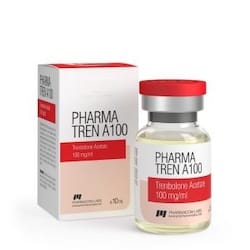
Secure Your Tren Ace Supply Online Today
Navigating the Tren Ace Procurement Landscape
If you want to get this right, you need to grasp the massive gap between research-grade CAS 10161-34-9 and materials meant for medical use. You shouldn’t just grab any random container of powder. For any legitimate scientific study, you must track down analytical reference standards that hit a purity level of 98% or higher.
I always suggest hunting for small laboratory vials from respected names like Cayman Chemical or LGC Standards. Avoid the temptation to buy massive bulk shipments of raw chemicals. It is a common pitfall for those just starting out.
Think of the marketplace as a deep, unpredictable ocean. The surface might look calm and uniform everywhere, but the currents underneath are wildly different. A vendor offering huge amounts at a dirt-cheap price is usually throwing a giant red flag your way.
When you are chasing precision science, you aren’t searching for a massive pile of powder. You are actually hunting for a lighthouse of accuracy. You need something that guides you through the fog of uncertainty.
Real lab work lives and dies by a strict 98% purity threshold. If your substance falls below that mark, your entire experiment might go sideways. Fluctuation in purity turns your precious data into a pile of unscientific guesses.
It is much better to pay a higher price for total certainty than to squander weeks on results that are essentially useless. The bottom line is that precision is your best friend in the lab.
You will notice that the cost of these high-purity standards can jump around quite a bit. Market volatility plays a huge role in what you pay for a tiny vial compared to a larger shipment. It is a tricky dance between supply and demand.
The unwary often get blindsided if they aren’t staring closely at the technical specifications. Always keep a sharp eye on the details before you open your wallet.
Distinguishing Grade and Purity
The first lesson is mastering the difference between pharmaceutical-grade items and CAS 10161-34-9, which is the specific chemical ID for this molecule. Pharmaceutical grades are strictly for clinical environments. Conversely, research-grade substances belong only in a lab setting.
Mixing these two categories up is a mistake you only get to make once. It can derail your entire project before it even starts. Pay close attention to the intended application of the material.
As you scan different vendors, you might stumble upon sites like poseidonrx.com or other specialized sellers. However, if your goal is pure scientific inquiry, you must seek out analytical reference standards. These are the tools used to verify the identity and cleanliness of other samples.
I have watched many researchers fall into the trap of confusing bulk quantities with small vials. Bulk chemicals are often sold in massive, unrefined amounts for industrial manufacturing. On the other hand, small-scale laboratory vials are measured out with extreme precision for testing.
Trying to use bulk material for a precise assay is like trying to perform brain surgery with a sledgehammer. It is simply the wrong tool for the job. You need surgical precision for your testing.
What this means for you is that the label is far more important than a low price. Always double-check that the CAS number matches the molecule you are actually seeking. If the paperwork doesn’t align with the chemical structure, walk away immediately.
Sourcing from Trusted Authorities
If you want to do this the right way, you have to stick with the heavy hitters. Companies like Cayman Chemical offer the high-fidelity standards that researchers depend on every single day. These aren’t some random backyard operation; they are established scientific institutions.
Another top-tier choice for specialized needs is LGC Standards. They provide very specific products, such as the TRC-T719080, which are built specifically for high-level analytical testing. Using these recognized brands takes a massive layer of guesswork out of your daily workflow.
This allows you to focus on the actual science instead of constantly troubleshooting your materials. You want to spend your time thinking, not fixing errors caused by poor supplies.
By sourcing from a true authority, you are buying much more than just a chemical. You are actually purchasing a guarantee of consistency. That peace of mind is worth every single cent when you are working against a tight budget or a deadline.
Keep a close watch on how prices shift, as they often mirror how complex the purification process was. A $200 vial might seem expensive compared to a $20 option from a random source. However, that $200 vial is the one that likely carries the 98% purity certificate you need.
You can’t actually trust your results without that level of certainty. Don’t let a cheap price tag trick you into wasting your time and your research budget.
| Source Category | Primary Application | Purity Level |
| Analytical Standard | Laboratory Testing | ≥98% (High) |
| Bulk Chemical | Industrial/Manufacturing | Variable |
| Pharmaceutical Grade | Clinical/Medical | Strictly Regulated |
The Chemistry and Molecular Blueprint
Think of trenbolone acetate as a modified version of nandrolone, specifically designed for high-impact research. Its core structure is a 19-nor steroid, but it carries a distinctive double bond at the third position. By adding an acetate ester to the 17β position, chemists drastically change how the molecule behaves and how long it stays active.
This specific modification is what allows the ester to cleave rapidly once it enters a biological system. It turns a raw, unstable molecule into a highly potent tool for laboratory settings. Without this adjustment, the compound would likely vanish from the bloodstream much too quickly to be useful for any serious study.
The real magic happens at the 17th carbon, where that acetate ester sits. You can view this short-chain fatty acid derivative as a biological stopwatch. It dictates the speed at which the substance hits the bloodstream, providing a level of control that the base molecule simply cannot offer on its own.
I always tell my colleagues that the architecture of a molecule is the foundation of your entire project. If the chemical structure is flawed, your whole timeline will fall apart like a house of cards. You have to know the exact makeup of your material before you even begin your first protocol.
Structural Details and Potency Levels
In the lab, names can sometimes feel like a different language. You might run into terms like Trenbolone 17β-Acetate or even RU-1697. Don’t let these terms throw you off; RU-1697 isn’t a different chemical entirely. It is simply a way to label the high affinity this specific steroid has for androgen receptors.
The ”19-nor” label is a massive clue regarding its strength. This means the molecule is missing the carbon atom at the 19th position, making it significantly more powerful than standard testosterone. This tiny structural shift is the primary driver behind the intense biological reactions researchers see during assays.
Stability is where the acetate ester really earns its keep. By attaching this group to the 17β position, the molecule becomes much easier to handle in a lab environment. It stays intact much longer, ensuring that what you pull from the vial is exactly what you expected to find.
What this means for you is a guarantee of reproducibility. In my experience, if your chemical is unstable, your data will bounce around like a pinball. You cannot draw solid scientific conclusions if your samples are constantly degrading; you need consistency to prove your findings are real.
The Necessity of Rigorous Verification
Why do I get so obsessed with CAS numbers? Because a number like 10161-34-9 is the only way to know for sure what is in your container. Names can be translated incorrectly or used loosely, but a CAS number is a unique digital fingerprint that is impossible to fake.
I have seen researchers throw thousands of dollars down the drain because they trusted a label instead of a verified ID. If the CAS number on your paperwork doesn’t match your shipment, stop right there. It is a massive red flag that the purity of your material is a gamble you shouldn’t take.
When we talk about purity, we aren’t just saying the sample is ”clean.” We are looking for a specific threshold, typically 98% or even higher. This level of cleanliness ensures that the results you see are caused by the actual molecule, not by some random byproduct lurking in the mixture.
The bottom line is that your results are only as reliable as your starting materials. A sample that is only 90% pure contains 10% of ”other stuff” that could completely skew your entire dataset. Always insist on a detailed Certificate of Analysis (CoA) to confirm those exact purity levels.
If you are looking to source high-fidelity reference standards for your lab, take a look at these typical price points.
| Sourcing Category | Standard Amount | Estimated Price |
|---|---|---|
| Analytical Reference Standard | 10 mg | $150 |
| High-Purity Research Vial | 100 mg | $450 |
| Bulk Laboratory Grade | 1 g | $1,200 |
Navigating the Procurement of Pure Research Materials
Hunting for high-purity reagents means diving into the specialized world of lab marketplaces. You will find that costs for 100mg or 10mg quantities shift depending on the scale and the refinement level. You have to keep a sharp eye on CAS numbers and prioritize vendors who utilize cold shipment methods to protect delicate molecules.
Always remember to play by the rules regarding ”research use only” labels to stay compliant. It is a legal necessity when you are acquiring high-level analytical standards. If you miss these details, you’re just throwing money into a void of non-compliance and wasted effort.
Think of your supply chain like a high-performance racing engine. If you pour in cheap, low-octane fuel, that engine is going to sputter and die. In your lab, chemical purity serves that same vital role. You aren’t just grabbing a container of powder; you are purchasing the foundation for consistent, valid data.
I have watched brilliant researchers lose everything because they tried to chase the lowest price per milligram. They end up with a vial of useless sludge that refuses to dissolve. When dealing with high-affinity molecules, being cheap is actually the most expensive mistake you can make.
The bottom line is that your budget must reflect your demand for precision. When you are running high-stakes assays, there is zero room for guessing. You need to verify the exact percentage of purity and the precise molecular weight before that box ever hits your porch.
Price Tiers and Sample Sizes
As you start shopping, the price gap between bulk reagents and analytical standards will jump out at you. Analytical standards are the heavy hitters used for equipment calibration. Because they arrive in tiny, incredibly concentrated doses, the price per milligram is naturally much higher than other supplies.
Expect to pay a premium for a 10mg sample. The manufacturers spend a fortune on the intense purification processes required for such small amounts. Think of this as the ”micro-dose” of the laboratory world; it’s perfect for quick testing rather than massive, long-term experiments.
Once you move up to the 100mg tier, the math starts to change in your favor. You get a much larger volume of material, yet you are still working with high-purity supplies. This is often the sweet spot for specialized studies that require multiple trial runs without draining your entire budget.
What this means for you is the need for a tactical approach to ordering. Don’t waste money on a 100mg batch if you only need a tiny speck for calibration. Conversely, don’t try to power a month of research on a mere 10mg vial. Map out your mass requirements before you swipe your card.
| Quantity | Intended Application | Expected Cost |
| 10 mg | Testing or Calibration | $150 – $300 |
| 100 mg | Standardized Research Trials | $400 – $750 |
Managing Cold Chain and Logistics
Some molecules are incredibly temperamental and hate heat, light, or even a bit of movement. This is why ”cold shipment” is non-negotiable for certain items. This method uses insulated containers paired with dry ice or gel packs to keep the temperature steady during transit.
If a product requires a cold chain, it’s because the molecular structure breaks down at room temperature. If you get a package that should have been frozen and it arrives lukewarm, the chemistry is likely ruined. You’ve essentially bought an expensive, useless pile of waste.
I always advise my peers to read the ”storage requirements” on the datasheet before they buy. If the label says ”store at -20°C,” you better have a freezer ready for the moment that package arrives. You can’t leave it sitting on a doorstep waiting for the mailman.
Official documentation will tell you exactly what the temperature needs are. If you ignore those rules, you are playing a dangerous game with your experimental variables. Real precision starts with how you handle the delivery truck.
Establishing Supplier Credibility and Compliance
The legal side of this industry is a maze of ”research use only” labels. This distinction is everything. It signals that the material is strictly for laboratory testing and not intended for clinical use or human consumption. This label acts as a vital legal shield for the seller.
As you navigate this, make sure your lab setup is legally prepared to receive these materials. This usually requires specific permits or a legitimate institutional affiliation. Trying to dodge these rules by faking a ”research” setup is a fast track to a legal nightmare.
When vetting a supplier, look far beyond a flashy website. You need a Certificate of Analysis (CoA) for every single batch you buy. A CoA proves that the substance has actually been tested to meet its promised purity levels. If a company makes it hard to find one, walk away.
Never take their marketing word as gospel. Look for third-party verification and a history of reliable, transparent shipping. A reputable vendor will be open about their sourcing and documentation. If they act shady about their protocols, they are probably cutting corners on the actual chemistry too.
Packaging Integrity and Global Shipping
Sending materials across international borders adds a massive layer of headache to your plans. You have to deal with customs, various regulatory bodies, and much longer transit times. This increases the chance of temperature spikes that can destroy your sensitive compounds mid-journey.
When you compare different vendors, look closely at how they pack their goods. Do they use double-walled, reinforced boxes? Do they utilize vacuum-sealed layers? You want a supplier that handles your order like a piece of delicate technology, not just a random parcel in a pile of cardboard.
The timeline is another massive factor to consider. An international order might take three days or it might take three weeks. If you are on a deadline, the chaos of customs can be a nightmare. I have seen researchers lose entire weeks because a shipment sat in a hot customs warehouse.
The bottom line is to always prepare for the worst-case scenario. Assume the shipment will take longer than expected and might face a temperature surge. If a supplier can’t guarantee robust, climate-controlled shipping, they aren’t the right partner for serious research.
Side-by-Side Look at Popular Options
Sorting through different options requires a keen eye on price efficiency, esterification rates, and overall purity. Premium samples, such as Maxtreme Pharma’s Tren-Ace-Max, are often engineered to meet rigorous laboratory benchmarks for their potency.
At the same time, the way a molecule is structured through varying concentrations or different esterified versions will fundamentally change its metabolic pace. This shift directly influences how subjects in power sports experimental protocols react to the substance under study.
Measuring Purity Against Scientific Benchmarks
Think of Maxtreme Pharma’s Tren-Ace-Max as a tool built specifically for high-intensity research. To see if it’s worth your investment, you need to weigh it against standard laboratory benchmarks. These metrics serve as the industry’s yardstick, used by analytical chemists to confirm that a substance matches its label exactly.
A huge mistake many people make is chasing a bargain and ignoring the actual purity percentage. If you are working in a controlled environment, you really only want compounds with a concentration of ≥98%. Anything less introduces messy impurities into your variables, which can throw your entire data set out of alignment.
I’ve seen researchers burn through months of work because they didn’t realize their ”99% pure” supply was actually loaded with residual solvents or heavy metals. Always demand a Certificate of Analysis (CoA) before you buy. If a distributor gets defensive about showing you the exact chemical profile, treat that as a major red flag regarding their manufacturing integrity.
What this means for you is that you should aim for ”analytical reference standard” grade quality whenever possible. These are substances made specifically for high-precision testing. While the upfront cost might sting a bit more, the consistency they provide acts as the bedrock for any repeatable, scientifically sound laboratory study.
Esterification and Concentration in Sports Research
In the realm of power sports research, the ”packaging” of a molecule is just as vital as the molecule itself. This is where esterification comes into the conversation. An ester is a chemical group attached to the base to act as a ”timer,” changing how quickly the body absorbs the substance.
When you are comparing 200 mg units, you have to check the concentration of the active ingredient inside the carrier liquid. A 200 mg dose might be split between 1 ml or 2 ml of solvent. This specific concentration determines the liquid’s viscosity and how accurately you can measure the dose during an experiment.
The ”ester” portion of the name, such as the acetate found in Trenbolone Acetate, dictates the speed of the compound’s action. Acetate esters are known for being ”fast-acting,” meaning they hit the system hard and fast but also exit just as quickly. This creates a sharp peak and a rapid drop-off, which is a tricky variable to manage in any study.
The bottom line is that different esterified versions create different metabolic profiles. Some researchers want the steady, even levels provided by longer-acting versions, while others need the sudden onset of shorter esters. You must align the chemical’s ”release profile” with your specific research goals to avoid seeing weird data spikes.
The Relationship Between Cost and Quality
Let’s get real about the budget. You might see a $50 price tag and think you’ve scored a massive win, especially if the next guy wants $150. However, in chemical sourcing, you aren’t really paying for the liquid itself; you are paying for the verification that it’s actually pure.
To understand the real cost-to-purity ratio, you have to do a bit of math. If a $50 vial only hits 70% purity, you are actually paying more for every milligram of active material than if you had purchased a $100 vial with 99% purity. It is a classic case of ”you get what you pay for” in action.
Spotting high-quality synthetic compounds often comes down to watching for specific physical signs. A top-tier liquid should be crystal clear, with absolutely no visible sediment or ”floaties.” If the liquid looks cloudy or has gunk at the bottom, the compound has likely degraded or failed during the filtration stage.
You also want to look for stability in batch numbers. Reliable suppliers will ensure their chemical profiles stay consistent from one production run to the next. If the potency jumps around between orders, your research is essentially being built on shifting sand. Stick with providers who treat their chemistry with pharmaceutical precision.
| Metric | High-Quality Sign | Low-Quality Warning |
| Purity Level | ≥98% (Proven via CoA) | Unknown or <90% |
| Visual Clarity | Completely Transparent | Cloudy, oily, or contains sediment |
| Price Logic | Aligns with purity | Unrealistically cheap |
Lab Safety and Operational Standards
Working with Trenbolone Acetate demands a highly regulated workspace where safety gear is never optional. You need to operate within a controlled setting that utilizes top-tier protective equipment and intense containment measures. It is vital that researchers utilize high-purity reference markers to establish a baseline for both potency and cleanliness.
Think of your workspace like a pilot’s cockpit during a storm; a single slip in your routine can crash the whole mission. Handling a substance this potent is more than just a science task. You are wrestling with a high-impact variable every single day.
I have watched many newcomers approach chemical work with a casual attitude, only to have their entire study ruined by a tiny bit of cross-contamination. You have to respect every single milligram. That means using your own dedicated glass tools, perfectly calibrated pipettes, and a station that is scrubbed clean between every single test run.
What this means for you is that your surroundings dictate the quality of your data. If your lab is a mess, your results will be a mess too. You need a protected setup—ideally a fume hood or a secondary containment system—to ensure any airborne particles or spills are trapped and neutralized before they can reach you.
Why Benchmarking with Standards is Crucial
You wouldn’t try to measure the distance to the moon with a common school ruler, so why would you test a new chemical batch without a fixed benchmark? This is why using an analytical reference standard is a non-negotiable part of the job. These are exceptionally pure samples, often hitting a purity level of ≥98%, which help you calibrate your diagnostic machines.
Without these specific benchmarks, you are essentially flying through thick fog. If you want to verify that your current inventory matches what the label claims, you need a known quantity to act as a comparison. This validation process, which frequently utilizes liquid chromatography, lets you confirm the exact concentration and identity of what you are holding.
The bottom line is that your scientific integrity rests on this foundation. If you are investigating metabolic shifts, you can’t afford a moving baseline caused by fluctuating material potency. Using a high-purity standard ensures that any observed effects come from your experimental variables rather than a random flaw in the chemical’s makeup.
I often suggest to my peers that these standards serve as the ”North Star” for any serious lab. They provide a constant, unmoving point of truth in a world of shifting concentrations. Spending the money on premium standards might sting upfront, but it keeps you from the heartbreak of realizing a six-month study was based on faulty data.
Regulatory Compliance and Personal Protection
When you are managing high-potency chemicals, your personal protective equipment (PPE) is your primary shield. This involves much more than just a basic lab coat. You need the right mix of eye shielding, respiratory protection, and nitrile gloves. You must act as if every speck of dust or every minor splash is a direct exposure risk.
A massive part of managing these substances involves following strict labeling laws. You will see reputable vendors clearly state that their goods are intended for research purposes only and are not meant for human consumption. This distinction is critical for both legal protection and physical safety. These materials are crafted for controlled scientific study, not for use in biological organisms.
The truth is that the purity required for a controlled laboratory environment is on a totally different level than what you might find in other markets. By restricting these items to research-only use, manufacturers help shield the scientific community from the legal headaches and ethical traps of unregulated use. This keeps the focus strictly on the data and away from the dangers of unmonitored biological testing.
You also need a rock-solid plan for handling spills. Keep a specialized kit nearby that features absorbent materials and neutralizers specifically designed for organic compounds. If a vial cracks, don’t go hunting for paper towels; you should already be executing a practiced, professional containment procedure.
Optimizing Storage to Stop Degradation
You can think of chemicals as being somewhat ”alive”—they react, they change, and they eventually decay. To stop this breakdown, you must master the ”Big Three”: temperature, light, and oxygen. Trenbolone Acetate, particularly when it is in its acetate ester form, is quite sensitive to environmental stressors that can tear apart its molecular structure.
To keep things stable over the long haul, I highly suggest using a dedicated, temperature-controlled space. Many of my colleagues use laboratory-grade freezers or refrigerators to keep their stocks stable. If you notice the liquid becoming thicker or seeing any sediment appear, take that as a warning that the compound is degrading and is no longer reliable.
What this means for you is that your storage habits directly impact your wallet. If you leave your stock in a warm spot or an unsealed jar, you are basically watching your money evaporate into thin air. A $200 vial that turns into useless sludge in just a few months is a massive, avoidable mistake that a $20 vacuum container could have prevented.
Always run your inventory using a ”First In, First Out” (FIFO) method. Even in the best possible conditions, every chemical eventually hits an expiration date. By rotating your stock and keeping a close eye on the expiration dates listed on your COAs (Certificates of Analysis), you ensure you are always working with the freshest, strongest material.
| Environmental Factor | Optimal State | Risk of Breakdown |
| Heat | Refrigerated (2-8°C) | High (Heat speeds up decay) |
| Light | Amber Glass / Dark Storage | High (UV causes breakdown) |
| Air/Gas | Sealed / Inert Atmosphere | Moderate (Oxygen causes oxidation) |
Trackbacks & Pingbacks
[…] Buy Tren Ace […]
[…] Tren Ace For Sale […]
[…] Tren Ace For Sale […]
Kommentering är stängd.